The High Plateau is a massive layer cake of deep time. Unlike the jagged, tectonic peaks of the Rockies, the Allegheny Mountains are "dissected"—meaning they were once a flat plain that has been relentlessly carved out by water over millions of years. When you stand at Rimrock or Jakes Rocks, you aren't standing on a mountain peak; you are standing on the original roof of the continent.
The Rock of the Realm: Pottsville Conglomerate
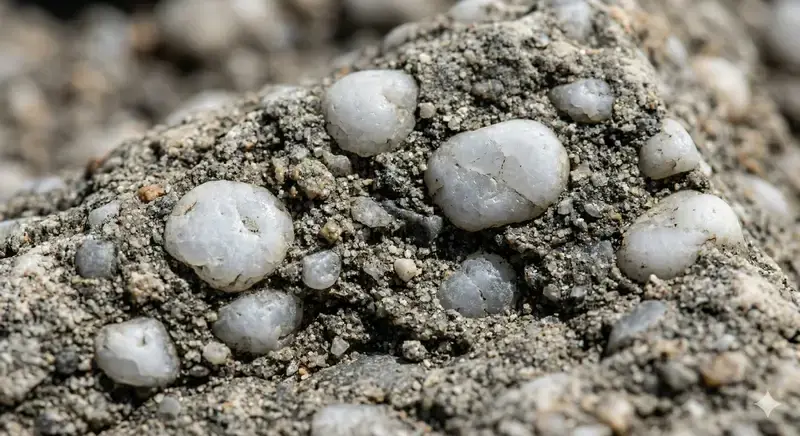
If the ANF has a signature stone, it is the Pottsville Conglomerate. This Pennsylvanian-age rock is what creates the massive, "city-sized" boulders found at Jakes Rocks and Rimrock. It is a sedimentary rock composed of sand and smooth, white quartz pebbles—often called "Allegheny Diamonds" by local rockhounds.
These quartz pebbles were tumbled in ancient riverbeds 300 million years ago before being compressed into the hard, gray caprock that protects the Plateau today. It is this high quartz content that gives our trails their famous "grit" and rapid drainage; the rock breaks down into coarse sand rather than slippery clay.
Minerals and the "Black Gold"
While you won't find traditional gemstones like emeralds here, the region’s "gems" are economic. The ANF sits atop the Bradford Third Sand, a porous rock layer that holds the world-famous "Pennsylvania Grade" crude oil.
Historically, the region also yielded significant Bituminous Coal and Iron Ore. In the early 1800s, bog iron was harvested from the swampy lowlands of the Plateau to fuel local furnaces. If you look closely at the "grit" banks of the Allegheny River, you may still find dark, heavy pebbles of Siderite (iron carbonate) or fragments of fossilized charcoal from the Carboniferous period.
Fossil Hunting: The Devonian Legacy
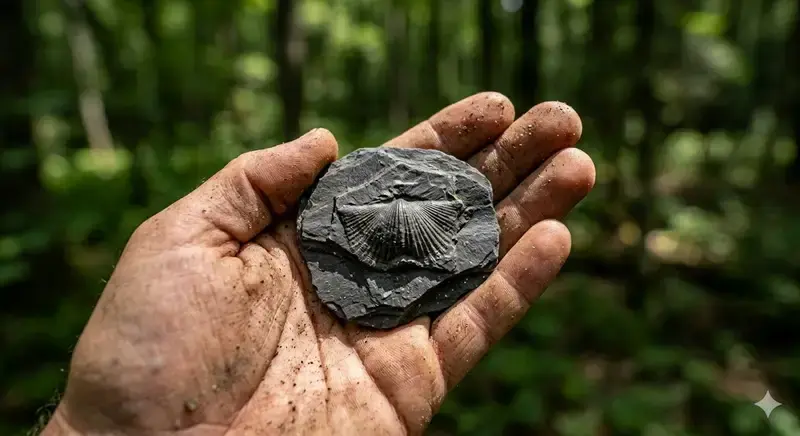
Because the ANF was once the floor of a shallow inland sea, the "gems" are often biological. In the shales exposed by road cuts or stream erosion, hikers can commonly find:
Brachiopods: Ancient shell-like organisms that look like "butterfly" imprints in the stone. They dominate the Devonian record on the Plateau.
Crinoids: Often called "sea lilies," their segmented stems look like tiny, threaded bolts scattered in the rock.
Dispatch Box: The Question of Trilobites
While brachiopods and crinoids are abundant, local fossil hunters often ask the holy grail question: Are trilobites common in the Kinzua area?
The short answer is: No, they are rare. While Pennsylvania is home to the official state fossil (the trilobite Phacops rana), they are exceptionally uncommon on the High Plateau. The bedrock here is composed of Late Devonian marine sediments (like the Chadakoin Formation) that often represent muddy, near-shore environments—conditions that were not ideal for preserving delicate trilobite exoskeletons intact.
If you find a trilobite here, it is usually a fragment—often just the heavily armored head (cephalon) or tail (pygidium). A complete, enrolled trilobite from the ANF region is a prize find, requiring exceptional luck and careful excavation of specific shale layers.
Quartz Geodes: Occasionally, cavities in the limestone layers will host small, sparkling quartz crystals, though true geodes remain a rare and prized find for local collectors.
The Geology of the "V"
The most striking geological feature is the "V-shaped" valley. During the last Ice Age, the glaciers stopped just north of the ANF. The massive meltwater runoff was forced south, carving the narrow, steep-walled trenches that now hold the Allegheny Reservoir. This "periglacial" activity is what exposed the layers of sandstone, siltstone, and shale that we see today, creating the rugged cliffs that eagles use for nesting.